
Inscreva-se na Newsletter
Digite seu endereço de e-mail abaixo e inscreva-se na nossa newsletter.
Documentando a paixão por carros

If you’re searching how does a turbo work, you probably want more than a vague answer. You want to know what the turbo actually does, why turbo cars feel stronger, and what changes when boost comes in.
In simple terms, how does a turbo work? A turbo uses exhaust gas energy to spin a turbine. That turbine is connected by a shaft to a compressor, and the compressor forces more air into the engine. More air allows the engine to burn more fuel efficiently and make more power from a smaller displacement.
That is why turbocharging became so important in modern performance and everyday cars. It can improve power density, mid-range torque, and drivability when the system is well matched to the engine.
Before going deeper, it helps to understand two related mods often discussed with turbo cars: what is an ecu tune and what is a downpipe.
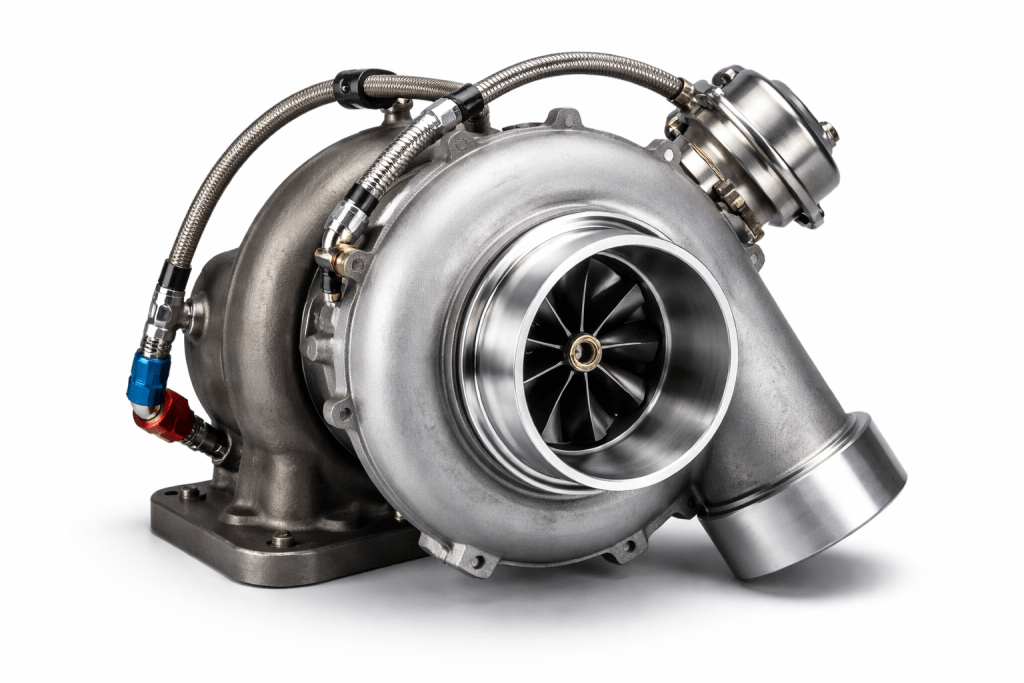
When people ask how does a turbo work, they are usually asking one of three things:
how the turbo makes more power
how it builds boost
and why turbo cars feel different from naturally aspirated cars
The short answer is that a turbocharger reuses exhaust energy that would otherwise leave through the tailpipe. Instead of wasting that flow completely, the system uses it to spin a turbine wheel. That turbine wheel turns a compressor wheel on the intake side, which packs more air into the engine.
That is the core of how does a turbo work: exhaust energy on one side, compressed intake air on the other.
The clearest way to explain how does a turbo work is step by step.
After combustion happens inside the cylinders, exhaust gases exit the engine at high temperature and speed. Those gases travel through the exhaust manifold toward the turbocharger.
Inside the turbo, the exhaust gas enters the turbine housing and hits the turbine wheel. That flow makes the turbine spin extremely fast.
The turbine wheel is connected to the compressor wheel by a shaft. When the turbine spins, the shaft spins too.
On the intake side, the compressor wheel draws in outside air and compresses it. That denser air is then pushed toward the engine.
With more oxygen available in the cylinders, the engine can burn more fuel efficiently. That is where the extra power comes from.
So if someone asks you how does a turbo work, the simplest complete answer is this: the turbo uses exhaust gas to spin a turbine, which drives a compressor that forces more air into the engine.
A lot of people search how does a turbo work but still miss the real reason the system matters.
Engines make power by burning air and fuel. If you can get more oxygen into the cylinders, the engine can support a stronger combustion event. A turbo helps do that without increasing engine size.
This is why a smaller turbocharged engine can often feel much stronger than an older naturally aspirated engine of similar displacement. The turbo is not “creating power from nowhere.” It is helping the engine ingest more air than it could on its own under normal atmospheric pressure.
That is also why turbo cars respond so well to supporting mods and calibration changes. If airflow, temperature control, and tuning are improved together, the result can be dramatic.
You cannot explain how does a turbo work well without explaining boost.
Boost is the extra air pressure the turbo creates in the intake system above normal atmospheric pressure. When people say a car is running 10 psi, 15 psi, or 20 psi of boost, they are talking about how much additional intake pressure the turbo system is producing.
More boost usually means more airflow potential, but that does not mean “more is always better.” Boost has to match the engine, fuel, cooling, and tune. Chasing pressure without the right setup is one of the fastest ways to turn a fun project into an expensive problem.
Another important part of how does a turbo work is temperature.
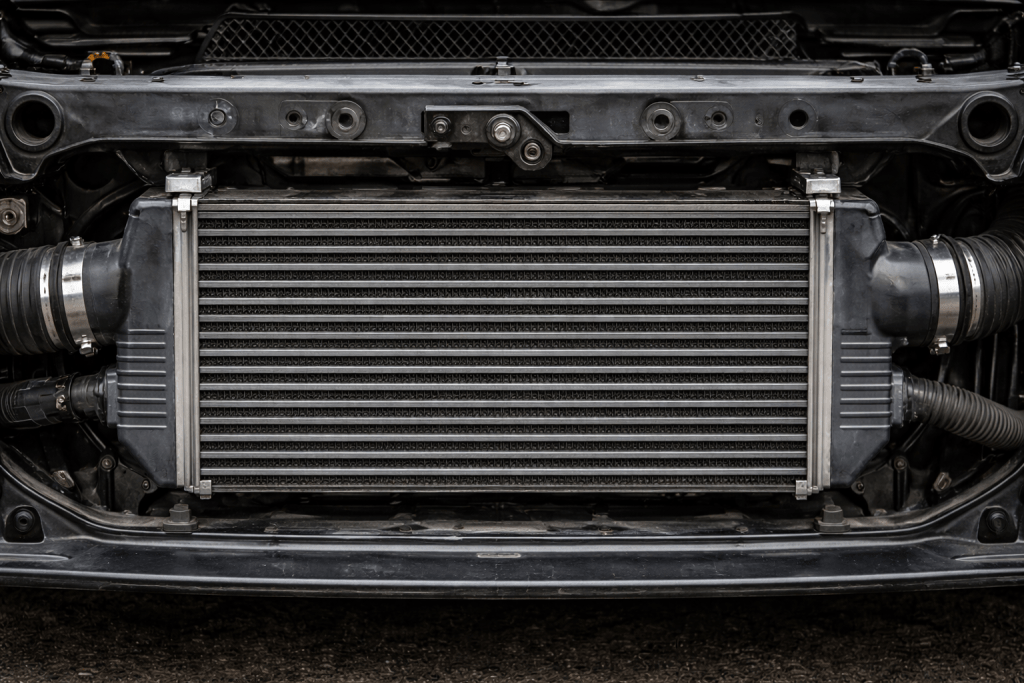
When air is compressed, it heats up. Hot air is less dense than cooler air, which is not ideal for performance. That is why many turbo cars use an intercooler. The intercooler cools the compressed air before it enters the engine, increasing air density and helping the system work more efficiently.
This matters because turbo performance is not just about pressure. It is also about the quality of the charge air going into the combustion chamber.
That is one reason turbo builds often start to branch into related topics like intercoolers, intake upgrades, and software calibration.
If you want to go deeper into that part of the system, this is a useful reference on how an intercooler helps turbo performance.
If you want to explain how does a turbo work properly, you also need to mention the wastegate.
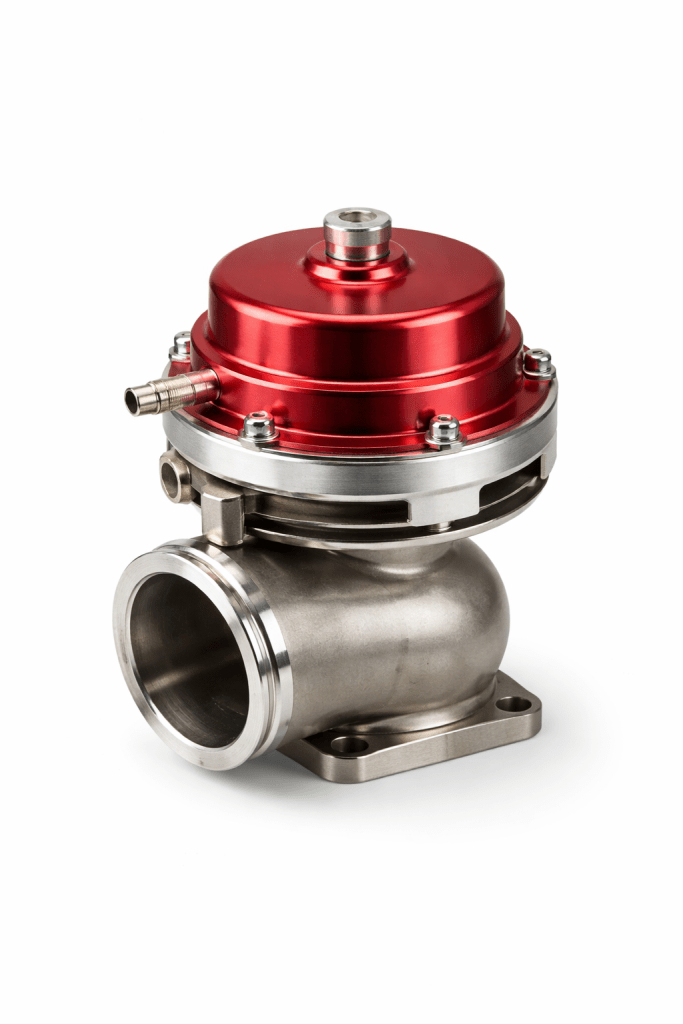
The wastegate controls boost by allowing some exhaust gas to bypass the turbine once a target pressure is reached. Without that control, the turbo could keep spinning harder and harder, creating more boost than the engine or tune is supposed to handle.
In simple language, the wastegate helps prevent the turbo from overdoing it.
This is one of the most important control points in the system. It is also why turbo response is not just about the turbo itself. The overall behavior depends on hardware, actuator strategy, ECU calibration, and the rest of the airflow setup.
One of the most common follow-up questions after how does a turbo work is about turbo lag.
Turbo lag is the delay between pressing the throttle and getting full boost response. That delay exists because the turbo needs exhaust flow and engine load to spin up hard enough to create meaningful pressure.
Not every turbo car feels the same. Turbo lag depends on turbo size, engine size, tune, gearing, exhaust flow, and how the manufacturer designed the system. A small turbo usually spools faster, while a larger turbo may deliver more top-end power but take longer to wake up.
That trade-off is one of the biggest themes in turbocharged performance.
When people ask how does a turbo work, they are often really asking what it feels like from the driver’s seat.
In a well-matched turbo car, the biggest difference is usually the torque in the mid-range. The car can feel stronger in passing situations, more energetic when you roll into the throttle, and more flexible without needing as many downshifts.
That is why turbocharged engines became so popular in both enthusiast cars and regular daily drivers. Done right, they make a car feel lighter, quicker, and easier to drive fast without requiring a huge engine.
A fair answer to how does a turbo work also has to include the downside.
Yes, turbo systems can increase heat and mechanical stress compared with a similar naturally aspirated setup. The turbo itself operates in a very demanding environment, and the engine must handle higher cylinder pressures, more heat, and more dependency on good cooling, lubrication, and tuning.
That does not mean turbo cars are automatically unreliable. It means they are more sensitive to neglect, poor calibration, cheap parts, and bad maintenance habits.
For that reason, a turbo car should always be treated as a system. The tune, intercooler, exhaust flow, fuel quality, and general health of the engine all matter together.
This is where the topic gets especially relevant for the TorqueBrief audience.
Once you understand how does a turbo work, it becomes easier to understand why mods like ECU tuning and downpipes are so common on turbo platforms. If the turbo can move more air, the ECU can be recalibrated to change boost targets, torque delivery, throttle response, and supporting strategies. And if the post-turbine exhaust flow is improved, the system may respond better depending on the platform.
That is why these topics connect so naturally:
A turbo is rarely just “one part.” It sits in the middle of an entire airflow and control package.
So, how does a turbo work?
A turbo works by using exhaust gas to spin a turbine, which turns a compressor that forces more air into the engine. That extra air allows the engine to burn more fuel efficiently and produce more power from a smaller engine size.
That is the short answer.
The more complete answer is that how does a turbo work involves turbine speed, compressor airflow, boost control, intercooling, and ECU strategy all working together. When the system is well designed, a turbo car can feel powerful, responsive, and surprisingly efficient. When the setup is poor, the same system can feel laggy, hot, and unreliable.
For the US market, the winning angle is not just “turbo equals more horsepower.” It is understanding how the system works so you can make smarter choices about tuning, airflow mods, and daily drivability.
How does a turbo work in simple words? It uses exhaust gas to spin a turbine, and that turbine drives a compressor that pushes more air into the engine.
How does a turbo work compared with an NA engine? A naturally aspirated engine pulls air in mostly on its own, while a turbocharged engine forces in more air under pressure.
How does a turbo work with supporting mods? A better-flowing exhaust path and the right ECU calibration can help the turbo system respond more effectively, depending on the platform and setup.