Inscreva-se na Newsletter
Digite seu endereço de e-mail abaixo e inscreva-se na nossa newsletter.
Documentando a paixão por carros
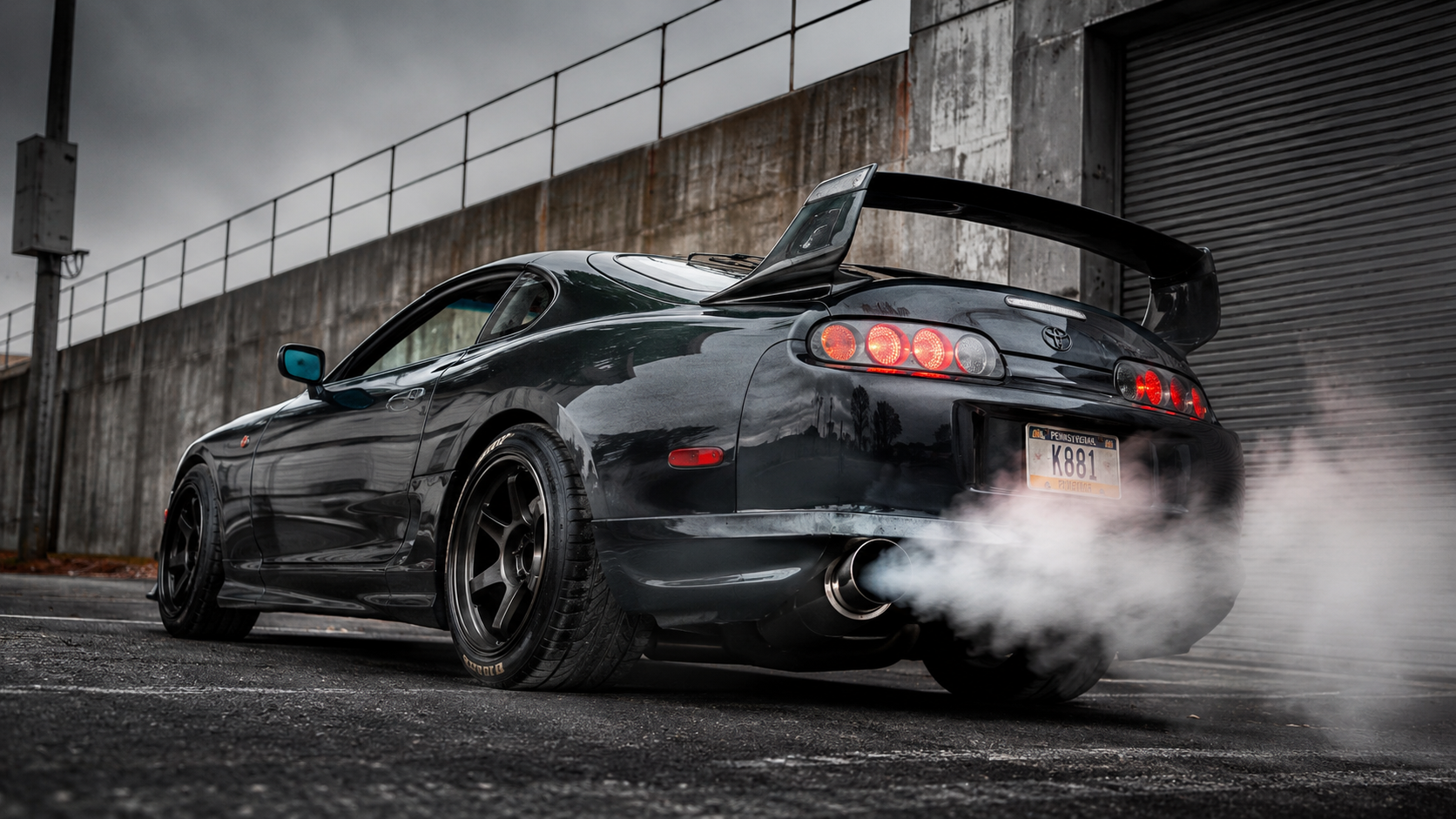
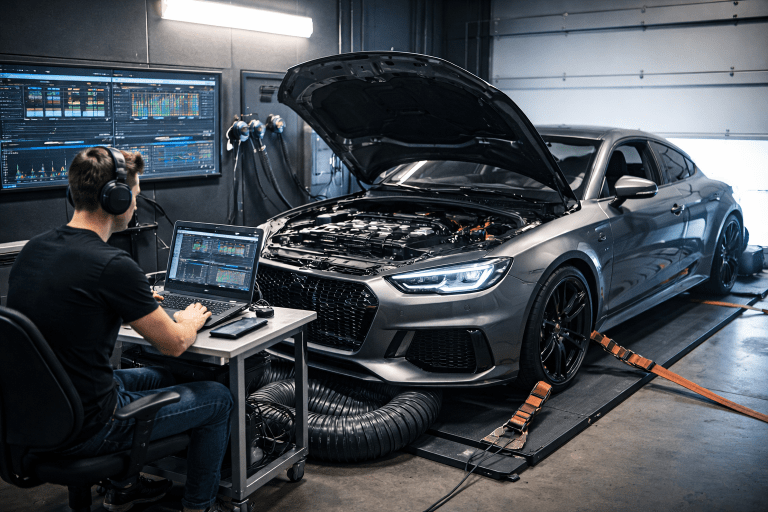
If you are asking how much horsepower does a stage 1 tune add, the realistic answer is usually 5 to 20 horsepower on a naturally aspirated car and 30 to 80 horsepower on many modern turbocharged cars. Some high-output turbo platforms can gain even more, especially on 93 octane or ethanol blends, but the safe answer depends on the engine, fuel, tuner, condition of the car, and how horsepower is measured.
For most U.S. drivers, a Stage 1 tune is popular because it does not normally require major hardware. It is usually an ECU calibration for a mostly stock vehicle. The tune may adjust boost, torque limits, ignition timing, throttle mapping, fueling, and other factory limits to make the car feel stronger without turning it into a full build.
So, how much horsepower does a stage 1 tune add in the real world? The best answer is: enough to feel clearly different on a healthy turbo car, but not always enough to transform a naturally aspirated car.
Here is the simple version:
| Engine type | Typical Stage 1 horsepower gain | What you usually feel most |
|---|---|---|
| Naturally aspirated 4-cylinder | 5–12 hp | sharper throttle, small top-end gain |
| Naturally aspirated V6/V8 | 10–25 hp | better response, mild power increase |
| Small turbo gasoline engine | 25–60 hp | much stronger mid-range torque |
| Performance turbo gasoline engine | 40–100+ hp | faster highway pulls, harder acceleration |
| Turbo diesel | hp varies, torque gain is usually the main change | stronger towing and passing torque |
The phrase how much horsepower does a stage 1 tune add is important, but peak horsepower is not the only number that matters. A good Stage 1 tune often changes the area under the curve, meaning the car can make more torque earlier and hold power longer. That is why a tuned car may feel much faster even if the peak horsepower gain does not look huge.
If you are still deciding whether the upgrade makes sense for real commuting, read TorqueBrief’s guide on whether a Stage 1 tune is worth it for a daily driver.
A Stage 1 tune is the first performance calibration level for a mostly stock car. In most cases, it does not require a downpipe, upgraded turbo, built engine, or major fuel-system changes.
A typical Stage 1 tune may change:
That is why how much horsepower does a stage 1 tune add depends heavily on the platform. A factory-turbo car usually has more hidden potential because the ECU can safely request more boost within the limits of the stock turbo, intercooler, fuel system, and engine.
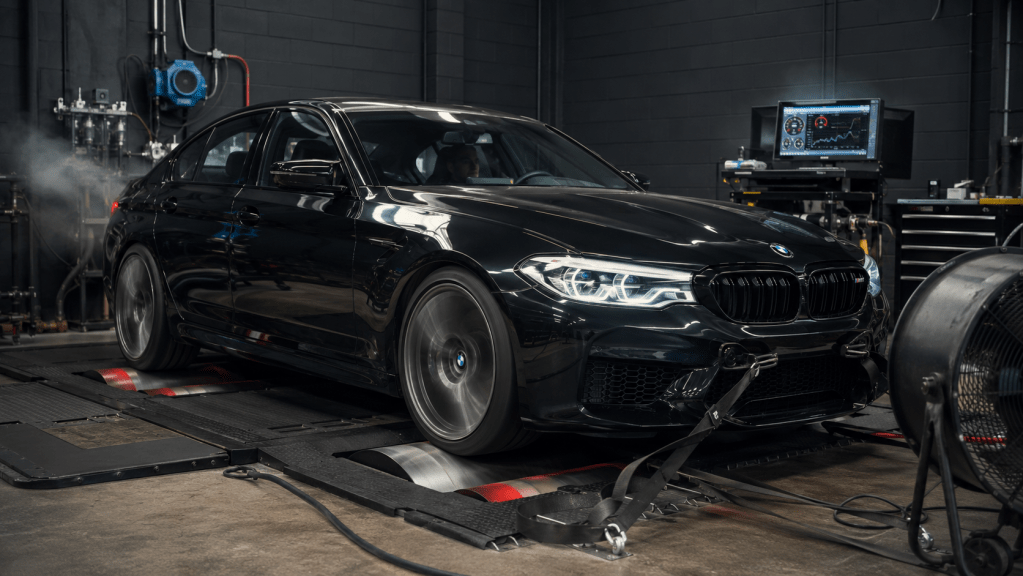
If someone asks how much horsepower does a stage 1 tune add, the first question should be: turbo or naturally aspirated?
Turbocharged engines usually respond better because a tune can increase boost pressure and reshape torque delivery. Many modern turbo cars are limited from the factory for emissions, fuel quality, drivetrain protection, heat management, and market positioning. A responsible tune can unlock some of that margin.
Naturally aspirated engines are different. Without a turbo forcing in extra air, the ECU has less room to create big power. A tune can optimize timing, throttle mapping, cam timing, fueling, and rev behavior, but it cannot create the same airflow jump as a turbo tune.
That is why a Stage 1 tune on a GTI, WRX, BMW 330i, Audi A4, Mustang EcoBoost, or turbo Civic usually feels more dramatic than a Stage 1 tune on a basic naturally aspirated commuter.
Real tuner examples show why the answer to how much horsepower does a stage 1 tune add can vary so much.
For example, APR has advertised large Stage 1 gains on the MK7 Volkswagen GTI, including up to 87 horsepower in one published example. Integrated Engineering also lists up to +81 horsepower for its MK8 GTI Stage 1 ECU tune. These are platform-specific claims, not universal promises, but they show why turbo cars are so popular for tuning.
A mild naturally aspirated car may only gain 8 horsepower and still feel a little better. A strong turbo platform may gain 50 horsepower and feel like a different car. Both can be “Stage 1,” but the result is not the same.
The honest answer to how much horsepower does a stage 1 tune add comes down to several factors.
In the U.S., many tunes are offered for 91 octane, 93 octane, and sometimes ethanol blends like E30 or E85. A 93-octane file can often run more timing or boost than a 91-octane file, assuming the car and conditions support it.
Never run a tune on fuel it was not designed for. If the file requires 93 octane and you regularly use 91, you may get knock correction, timing pull, lower power, or engine risk.
A tune does not fix a weak car. Before tuning, the car should have healthy spark plugs, clean filters, good coils, no boost leaks, fresh fluids, good tires, and no unresolved check engine lights.
For maintenance planning, TorqueBrief’s U.S. guide on how often to change oil is a useful starting point before adding more heat and load.
Many Stage 1 cars feel strong for one pull and weaker after repeated pulls because intake air temperatures rise. The tune may add power, but heat soak can make the ECU reduce timing or boost to protect the engine.
This is why dyno numbers and real street consistency are not always the same thing.
A car can show different results on a Dynojet, Mustang dyno, hub dyno, or road log. Wheel horsepower is also different from crank horsepower. If someone claims a huge gain, ask whether the number is at the wheels or at the crank.
So, how much horsepower does a stage 1 tune add on paper? One number. How much does it add in the way the car drives? That depends on the entire power curve.
Usually, no. Stage 1 is normally designed for stock hardware or very mild bolt-ons. Some cars may benefit from a drop-in filter, better intake, colder spark plugs, or upgraded intercooler, but those are not always required.
If you are considering intake changes, read TorqueBrief’s guide on whether a cold air intake needs a tune. Many basic intakes do not require tuning, but some MAF-based platforms and larger airflow changes do.
Avoid stacking random parts without a plan. A Stage 1 tune should match your exact year, make, model, engine, transmission, fuel, and hardware.
A conservative Stage 1 tune on a healthy car can be very livable. The safest daily-driver setup is usually:
The risk goes up when the tune is aggressive, the car is neglected, the owner uses the wrong fuel, or the calibration disables safety systems. More power means more heat, more cylinder pressure, and more stress on the drivetrain.
If you are asking how much horsepower does a stage 1 tune add because you want a reliable daily, do not chase the highest number. Chase the cleanest, safest, most consistent tune.
A Stage 1 tune can affect warranty discussions. It does not automatically erase every warranty on the car, but if a manufacturer or dealer believes the tune contributed to a failed engine, turbo, clutch, transmission, or driveline component, the claim can become difficult. For more detail, read TorqueBrief’s article on whether an ECU tune voids warranty.
For legal context, the FTC’s Magnuson-Moss Warranty Act page is worth understanding. Emissions are separate. The EPA’s aftermarket defeat device and tampering fact sheet explains why emissions-related tampering can be a serious issue. California drivers should also check the CARB aftermarket parts program.
Insurance also matters if your car is modified. TorqueBrief has a full U.S. guide to insurance for modified cars if you want to protect the build properly.
The best way to confirm how much horsepower does a stage 1 tune add is to compare data before and after.
Use:
A dyno chart is useful, but it is not the whole story. A tune that makes slightly less peak horsepower but delivers smoother torque, lower knock correction, and better heat control may be better for a daily driver.
Before buying any used tuned car, check for open recalls through the NHTSA recall lookup, and inspect maintenance history carefully. If you are new to building cars, TorqueBrief’s guide to the best project cars for beginners can help you choose a better platform from the start.
So, how much horsepower does a stage 1 tune add?
For a naturally aspirated car, expect roughly 5 to 25 horsepower. For many modern turbo cars, expect roughly 30 to 80 horsepower. For stronger turbo platforms on better fuel, the gain can sometimes exceed that, but those numbers should always be judged by platform, fuel, dyno method, and tuner quality.
The smarter way to think about how much horsepower does a stage 1 tune add is this: Stage 1 is less about chasing one dyno number and more about making the car stronger, sharper, and more responsive without requiring major hardware.
If the car is healthy, the tune is reputable, the fuel is correct, and your expectations are realistic, Stage 1 can be one of the best performance upgrades for a U.S. daily driver.
On many turbocharged gasoline cars, how much horsepower does a stage 1 tune add usually falls between 30 and 80 horsepower. Some platforms gain less, while strong turbo engines on 93 octane or ethanol blends may gain more.
On many naturally aspirated cars, how much horsepower does a stage 1 tune add is usually closer to 5 to 20 horsepower. The car may still feel better because of throttle response, timing optimization, and smoother power delivery.
No. Stage 1 can improve torque, throttle response, boost control, power delivery, and drivability. Many drivers feel the torque increase more than the peak horsepower gain.
Only if the tune is designed for 93 octane. Many U.S. tuners offer separate 91 and 93 octane files. Always use the fuel required by your exact calibration.
It can if the tune is too aggressive, the car is unhealthy, the fuel is wrong, or the calibration is poor. A conservative tune on a well-maintained car is much safer than a cheap file chasing maximum dyno numbers.
No. Stage 1 can improve torque, throttle response, boost control, power delivery, and drivability. Many drivers feel the torque increase more than the peak horsepower gain.
Only if the tune is designed for 93 octane. Many U.S. tuners offer separate 91 and 93 octane files. Always use the fuel required by your exact calibration.
It can if the tune is too aggressive, the car is unhealthy, the fuel is wrong, or the calibration is poor. A conservative tune on a well-maintained car is much safer than a cheap file chasing maximum dyno numbers.
For many modern turbo cars, yes. The cost-to-performance ratio is strong, especially when the car is healthy and the tune is reputable. For naturally aspirated cars, the value depends more on the platform and expectations.