Inscreva-se na Newsletter
Digite seu endereço de e-mail abaixo e inscreva-se na nossa newsletter.
Documentando a paixão por carros
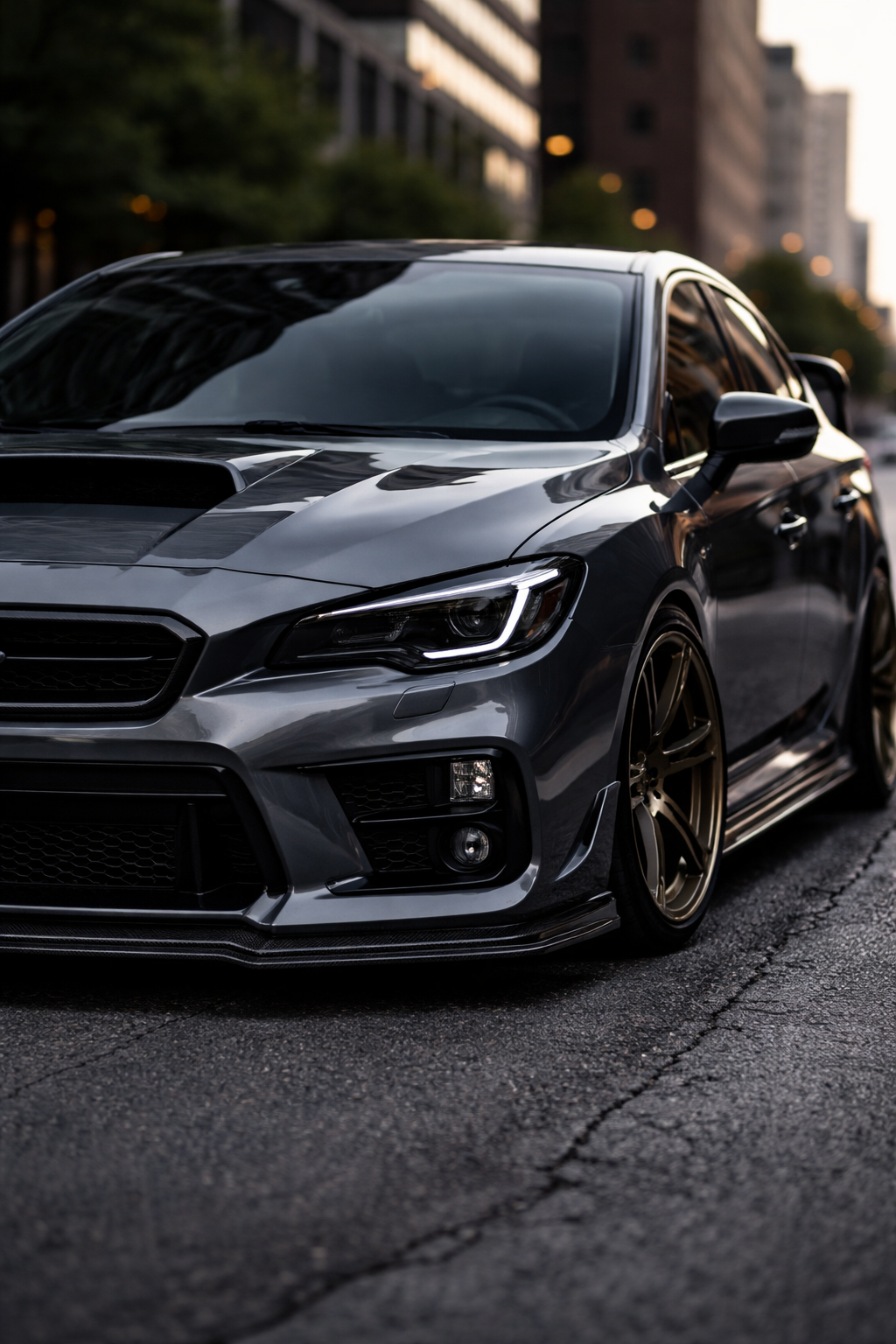
If you are asking are smoked headlights legal, the practical answer is simple: usually no for street use when the smoked look is created with aftermarket film, spray tint, dark covers, or any material that reduces headlight output. Factory smoked-style headlights can be legal, but only when the complete headlamp assembly is designed, tested, and certified to meet U.S. lighting requirements.
That distinction matters. A headlight can look dark when it is off and still produce a compliant white beam when it is on. But if you add tint over a stock lens, you may reduce brightness, change beam pattern, affect color, and make the car easier to cite or fail during inspection.
This guide explains are smoked headlights legal for U.S. drivers, what federal rules say, how state laws can apply, what happens during inspection, and what safer alternatives make more sense for a clean build.

So, are smoked headlights legal? In most street-driving situations, smoked headlights are risky and often not legal if the smoke is added after the vehicle was manufactured.
The safest answer is:
The issue is not just the color. The issue is whether the headlight still meets the required visibility, beam pattern, photometric performance, and white-light requirements after the modification.
Many car owners ask are smoked headlights legal because the mod looks simple. A shop applies a dark film, a seller advertises “smoke covers,” or a DIY owner uses lens spray and the front end instantly looks more aggressive.
The problem is that headlights are safety equipment, not just styling parts.
Under federal lighting rules, headlamps are designed around specific brightness levels, beam cutoffs, lens materials, reflector geometry, and light-source performance. The current federal standard is Federal Motor Vehicle Safety Standard No. 108, which covers lamps, reflective devices, and associated equipment.
FMVSS 108 also says no additional equipment may impair required lighting effectiveness, and that steady-burning headlamps must not have styling ornaments or other features such as translucent covers or grilles in front of the lens. That is why a smoked overlay can be a problem even if the headlights still “turn on.”
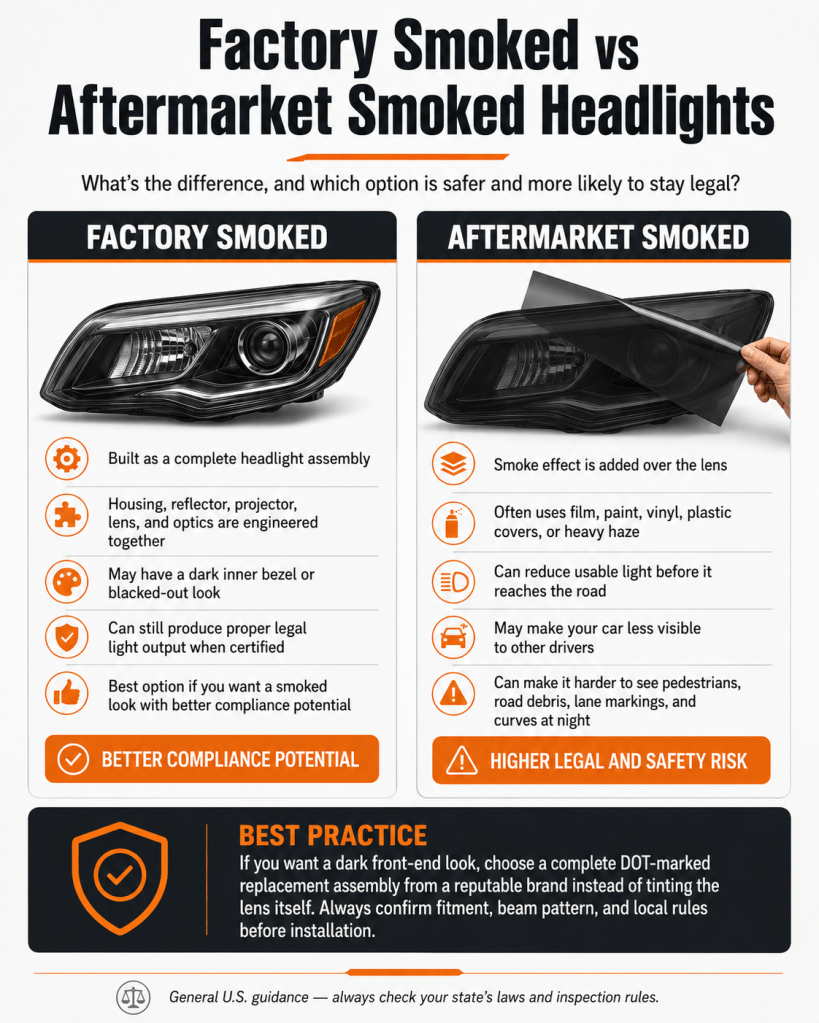
To understand are smoked headlights legal, separate factory design from aftermarket alteration.
A factory smoked-style headlight is built as a complete lighting assembly. The internal housing, reflector, projector, lens clarity, LEDs or bulbs, and optical design are engineered together. If the assembly is properly certified, it can have a dark inner bezel or blacked-out appearance while still producing legal light output.
Aftermarket smoked headlights are different when the smoked effect comes from something added over the lens. Film, paint, vinyl, plastic covers, or heavy haze can reduce usable light before it reaches the road. That may make the car less visible to other drivers and make it harder for you to see pedestrians, animals, road debris, lane markings, and curves at night.
If you want a dark front-end look, choose a complete DOT-marked replacement assembly from a reputable brand rather than tinting the lens itself. Even then, confirm fitment, beam pattern, and local rules before installation.
A common mistake is asking are smoked headlights legal as if there is one simple national yes or no. The better way to think about it is this: federal rules influence how lighting equipment is designed and sold, while state laws control what you can operate on public roads.
Most states require headlights to display white light, meet visibility requirements, and stay in safe working condition. Some states also inspect lighting equipment during annual safety inspections. Others may only enforce the issue during a traffic stop.
For example, California requires vehicles to have compliant headlamps in specific positions and to use them during darkness or inclement weather. Texas has its own vehicle equipment chapter covering headlamps and lighting standards. Florida law is especially direct: headlamps must show white light, and a material or covering that alters headlamp light color may not be applied over a headlamp.
Because laws vary, are smoked headlights legal depends on your state, the exact product, how dark it is, whether it changes color, and whether it reduces output. When in doubt, check your state DMV, inspection manual, or motor vehicle code before modifying your lights.
If your state has safety inspections, are smoked headlights legal becomes a practical question: will the car pass?
A smoked headlight setup can fail inspection if the inspector sees dark tint, damaged lenses, reduced output, non-white light, poor aim, missing DOT markings, aftermarket covers, or a beam pattern that does not look safe. Some inspection stations are stricter than others, but relying on luck is a bad plan.
The risk is higher if the vehicle already has other modifications. A car with dark headlights, dark taillights, loud exhaust, illegal tint, or emissions changes may attract more attention. If you are building a modified daily driver, also read TorqueBrief’s U.S. guide to best insurance for modified cars so your paperwork matches your build.
Many drivers ask are smoked headlights legal if the tint is very light. The honest answer is still: maybe, but do not assume it is legal.
Light smoke film may appear harmless during the day, but it can still reduce light output at night. It can also interfere with the lens optics, scatter light, or make the beam less effective in rain, fog, or unlit areas. Some officers and inspectors will not measure photometric output on the roadside; they may simply cite the vehicle because the lens is visibly covered or altered.
If a product says “show use only,” “off-road use only,” “for car shows,” or “not for highway use,” take that seriously. That language usually means the manufacturer does not want buyers assuming the product is street legal.
Another reason are smoked headlights legal gets confusing is the phrase “DOT approved.” A stock headlight may have DOT markings because the original assembly was certified. But once you place dark film or spray over the lens, that original certification does not automatically apply to the modified version.
The same logic appears across other car modifications. For example, TorqueBrief’s guide on whether cold air intakes are legal in California explains why the exact approved part and exact vehicle application matter. Fitment alone is not the same as compliance.
For headlights, do not treat a DOT mark on the lens as permission to cover the lens with tint. The legal concern is the final installed condition of the lighting equipment.
Even if you are mostly focused on style, safety is the biggest reason to be careful. Headlights are not only there so other people see your car. They are there so you can see far enough ahead to react.
Smoked headlights can create problems such as:
This is why the best answer to are smoked headlights legal is not only legal but practical. A dark look is not worth losing nighttime visibility on a daily driver.
If your goal is a cleaner front end, there are better options than tinting the lens.
First, restore cloudy headlights. Oxidized plastic already reduces output, and adding smoke tint over haze makes the problem worse. Second, consider a factory-style black housing or projector headlight assembly from a reputable brand. Third, use paint or wrap on body-color trim around the lights instead of covering the lens. TorqueBrief’s guide to wrap vs paint can help if the goal is visual change without touching the lighting surface.
If you want lens protection, consider clear protective film instead of smoke tint. A high-quality clear film can help reduce chips and light abrasion while preserving output better than dark film. For more context on protective films, see TorqueBrief’s guide: Is paint protection film worth it?
This article focuses on are smoked headlights legal, but the same logic often applies to taillights. Rear lighting also has required colors, brightness, reflectivity, and visibility requirements. Dark taillights can make brake lights and turn signals harder to see, which is dangerous and can create liability after a crash.
Many owners smoke both headlights and taillights for a matching look. That may look good in photos, but it can create two separate enforcement problems: reduced forward visibility and reduced rear signaling visibility.
Before asking are smoked headlights legal after the install, use this checklist before spending money:
If you are modifying more than just headlights, think about the whole legal picture. A lighting issue may not be as expensive as an emissions issue, but inspection problems can stack up. TorqueBrief’s U.S. guide on whether a downpipe will pass emissions is a good example of why “it fits” does not always mean “it passes.”
So, are smoked headlights legal? In most cases, aftermarket smoked headlights are not a smart street-use modification if the smoke comes from tint film, spray, or covers placed over the lens. The legal risk is that the modification can impair required lighting, alter color, reduce visibility, and fail state inspection.
Factory smoked-style headlights or reputable complete replacement assemblies may be legal when they are designed and certified to meet applicable standards. But the safest daily-driver recommendation is simple: do not darken the active headlight lens. Keep the beam white, bright, properly aimed, and compliant with your state’s rules.
If you want the smoked look, aim for black housings, clear lenses, proper DOT-marked assemblies, clean restoration, or cosmetic changes around the headlights instead of covering the light output itself.
Are smoked headlights legal in the U.S.? Usually not when the smoked look is created by aftermarket tint, spray, or covers that reduce output. Factory-style smoked assemblies may be legal if they are compliant and properly installed.
Smoked headlight covers are usually not legal for normal street driving, especially at night, because they place a dark object in front of required lighting equipment and may reduce headlight effectiveness.
Daytime driving does not automatically make smoked headlights legal. If the vehicle is required to use headlights in rain, fog, low visibility, or other conditions, the altered lamps can still create a problem.
Yes, they can. Enforcement varies by state and officer, but visibly darkened headlights can attract attention, especially if the beam looks dim, the light color changes, or the car has other visible modifications.
Are smoked headlights legal just because the lens has a DOT mark? Not necessarily. A DOT mark on the original headlight does not mean aftermarket tint placed over that headlight is legal.
The safest alternative is a compliant black-housing headlight with a clear lens, a properly restored OEM headlight, or a reputable DOT-marked replacement assembly that keeps the correct white beam and beam pattern.