
Inscreva-se na Newsletter
Digite seu endereço de e-mail abaixo e inscreva-se na nossa newsletter.
Documentando a paixão por carros
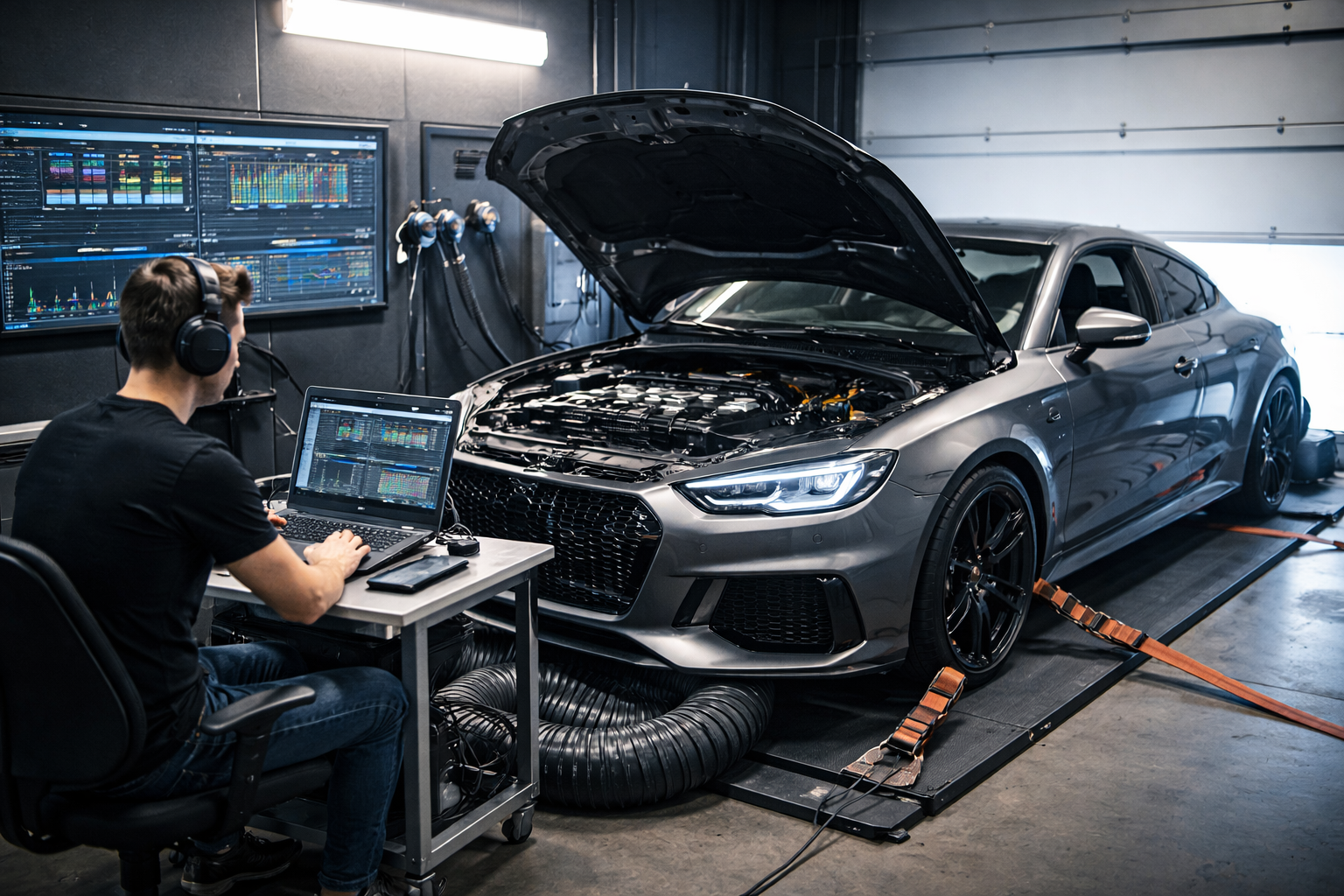
If you are asking will a downpipe pass emissions, you are probably planning a turbo upgrade and trying to avoid a failed inspection, check engine light, or legal headache. The honest answer is simple: sometimes a catted downpipe may pass, but a catless downpipe usually will not pass a street emissions inspection in the United States.
The real answer depends on your state, your vehicle, the type of downpipe, the catalytic converter, the ECU tune, OBD readiness monitors, visual inspection rules, and whether the part is approved for your application. So before buying the loudest or cheapest option, it is worth understanding how emissions testing actually works.
For a basic explanation of the part itself, read TorqueBrief’s internal guide on what a downpipe is. This article focuses on one specific question: will a downpipe pass emissions on a U.S. street car?
Important note: this guide is for general information only. It is not legal advice. Emissions rules can vary by state, county, model year, inspection program, and vehicle application.
In most U.S. states, will a downpipe pass emissions depends mainly on whether it keeps a functional catalytic converter and whether the car’s OBD system shows all required monitors as ready.
A high-quality catted downpipe has a better chance of passing than a catless setup. A catless downpipe removes the catalytic converter, increases emissions risk, often triggers catalyst-efficiency codes, and can fail both OBD and visual inspections.
Here is the short version:
| Setup | Emissions Test Risk | Daily Driver Recommendation |
|---|---|---|
| OEM downpipe | Lowest | Best for compliance |
| EPA-compliant replacement catalyst | Low to moderate | Good if properly matched |
| High-flow catted downpipe | Moderate to high | Depends on state and part approval |
| CARB EO-approved catted part | Lower in California-style inspections | Best legal path where required |
| Catless downpipe | Very high | Not recommended for street use |
So, will a downpipe pass emissions if it is aftermarket? Maybe. But “aftermarket” is not the key word. The key questions are: does it retain emissions equipment, is it approved for your car, does the ECU stay emissions-ready, and does your inspection program allow it?

A downpipe sits directly after the turbocharger. On many modern turbo cars, that area includes the catalytic converter and oxygen sensor locations. When you change the downpipe, you may change much more than sound and exhaust flow.
A downpipe can affect:
That is why will a downpipe pass emissions is not just a performance question. It is a compliance question.
If you are also changing software, read TorqueBrief’s guide on whether an ECU tune can affect warranty, because tuning, emissions systems, and dealer claims can overlap.
The biggest factor is whether the downpipe is catted or catless.
A catted downpipe includes a catalytic converter. It may be less restrictive than stock, but it still attempts to reduce pollutants before exhaust gases leave the tailpipe. A catless downpipe removes the converter completely.
If your question is will a downpipe pass emissions, this distinction matters more than almost anything else.
A catted downpipe can sometimes pass emissions when:
However, a catted downpipe is not automatically legal or guaranteed to pass. Some high-flow cats may still be less efficient than the factory unit, especially during cold start or strict inspection conditions.
A catless downpipe is the highest-risk option for emissions.
If someone asks will a downpipe pass emissions and the downpipe is catless, the practical answer for a street car is usually no. It may fail because the catalyst is missing, because the OBD system detects low catalyst efficiency, because monitors will not set, or because the inspector can visually see the missing emissions device.
The U.S. EPA’s tampering policy explains why removing or defeating emissions-control equipment can create enforcement issues. For a street-driven car, a catless downpipe is usually the wrong direction if inspection compliance matters.
Many U.S. emissions inspections rely heavily on OBD-II data. The inspector plugs into the diagnostic port and checks whether the car has stored codes, pending codes, and completed readiness monitors.
This is where many owners get surprised. A car can have no check engine light and still fail if the monitors are not ready.
So, will a downpipe pass emissions if the check engine light is off? Not always.
Common reasons for failure include:
Some tunes can suppress lights or alter monitor behavior. That may make the dash look clean, but it does not necessarily make the car inspection-ready. If you are modifying airflow and calibration together, TorqueBrief’s guide on whether a cold air intake needs a tune explains why sensor behavior matters on modern cars.
Some states and counties include a visual inspection. That means the inspector may check whether required emissions equipment appears to be present and properly installed.
This matters because will a downpipe pass emissions is not only about tailpipe gases or scan-tool data. A car can run clean enough for one part of the test and still fail because a required catalytic converter is missing, relocated, or obviously not approved.
Visual inspection rules vary by state and program, but the risk is higher when:
For California drivers, CARB’s aftermarket catalytic converter rules are especially important. CARB also explains that approved aftermarket performance parts receive an Executive Order when they are shown not to increase emissions, which can be checked through the aftermarket parts program.
This is the gray area. A high-flow catted downpipe may pass in some states, on some cars, with the right part and tune. But it is not guaranteed.
When people ask will a downpipe pass emissions, they often want one universal answer. Unfortunately, emissions programs are not universal across the U.S. Some areas have strict OBD testing. Some have safety inspection only. Some test older cars differently. Some states are much stricter about aftermarket cats and CARB approval.
A high-flow catted downpipe has the best chance when:
For a daily driver, this is usually the most balanced path: keep a catalyst, choose a proven part, avoid shady “CEL delete” strategies, and confirm the law in your state before installation.
A tune can help the car run correctly after airflow changes, but it can also create emissions problems if it disables diagnostics or masks faults.
If the downpipe is part of a bigger build, the tune matters. For example, a Stage 2 setup often includes a downpipe, more boost, and calibration changes. TorqueBrief’s Stage 1 tune guide for daily drivers is a good next read if you are still deciding how far to take the car.
Here is the important part: will a downpipe pass emissions with a tune? It depends on what the tune does.
A responsible emissions-aware tune should not be used to hide a failed or missing catalytic converter. Disabling codes, turning off monitors, or using software to defeat emissions checks can create legal and inspection problems. The U.S. Department of Energy’s Alternative Fuels Data Center notes that the Clean Air Act prohibits knowingly removing or rendering inoperative emissions-control devices on certified vehicles.
The U.S. market is complicated because emissions testing is not identical everywhere. California is different from Texas. New York is different from Florida. Even within the same state, requirements can vary by county, model year, vehicle type, and registration category.
That is why will a downpipe pass emissions is best answered with three filters:
If you live in a strict inspection area, do not rely on forum screenshots or someone saying “mine passed.” Their car, tune, inspection station, model year, and state rules may be different.
Before spending money, use this checklist.
Ask the seller or shop:
If the seller avoids these questions, that is your answer. The safest buying decision is not the loudest part. It is the part that matches your car, your goals, and your local inspection reality.
For a street-driven turbo car, the best setup is usually not catless. It is a well-built, catted, emissions-aware setup that supports performance without turning the car into a constant inspection problem.
If your priority is daily usability, the smarter order is:
Insurance can also matter on modified cars. If your build goes beyond mild bolt-ons, read TorqueBrief’s guide to insurance for modified cars before assuming every policy treats performance parts the same way.
So, will a downpipe pass emissions?
A stock downpipe is the safest emissions choice. A properly matched catted downpipe may pass in some situations, especially when it keeps the catalytic converter functional, keeps OBD monitors ready, avoids check engine lights, and complies with state rules. A catless downpipe usually will not pass a real emissions inspection for street use.
The best answer is this: will a downpipe pass emissions depends on the downpipe, the catalyst, the tune, the car, and the state. If passing inspection matters, choose a legal catted option, avoid emissions-delete tuning, verify approval for your vehicle, and check your local requirements before installing anything.
For U.S. daily drivers, performance is only half the decision. The other half is staying inspection-ready, street-friendly, and realistic about how emissions laws work.
Sometimes. A high-flow catted downpipe has a better chance than a catless downpipe, but it still depends on the part, vehicle, tune, readiness monitors, and state inspection rules.
Usually no for a street-driven U.S. car. A catless downpipe removes the catalytic converter, which can fail visual inspection, trigger catalyst-efficiency codes, and create legal issues.
Not always. No check engine light helps, but emissions tests may also check readiness monitors, stored codes, pending codes, catalyst function, and visual equipment.
Only if the part and setup meet California requirements. In practice, California drivers should look for CARB-approved parts with the correct Executive Order for their exact application.
A proper tune can help drivability, but a tune should not be used to disable emissions systems or hide a missing catalytic converter. Monitors still need to be ready, and the car still needs to meet inspection rules.
No. A catted downpipe is not automatically legal everywhere. Some states require specific approvals, and some parts are only legal for racing or off-road use.
The safest option is the OEM downpipe. After that, the best street-oriented option is a properly approved catted downpipe designed for your exact car and installed without disabling emissions diagnostics.