
Inscreva-se na Newsletter
Digite seu endereço de e-mail abaixo e inscreva-se na nossa newsletter.
Documentando a paixão por carros
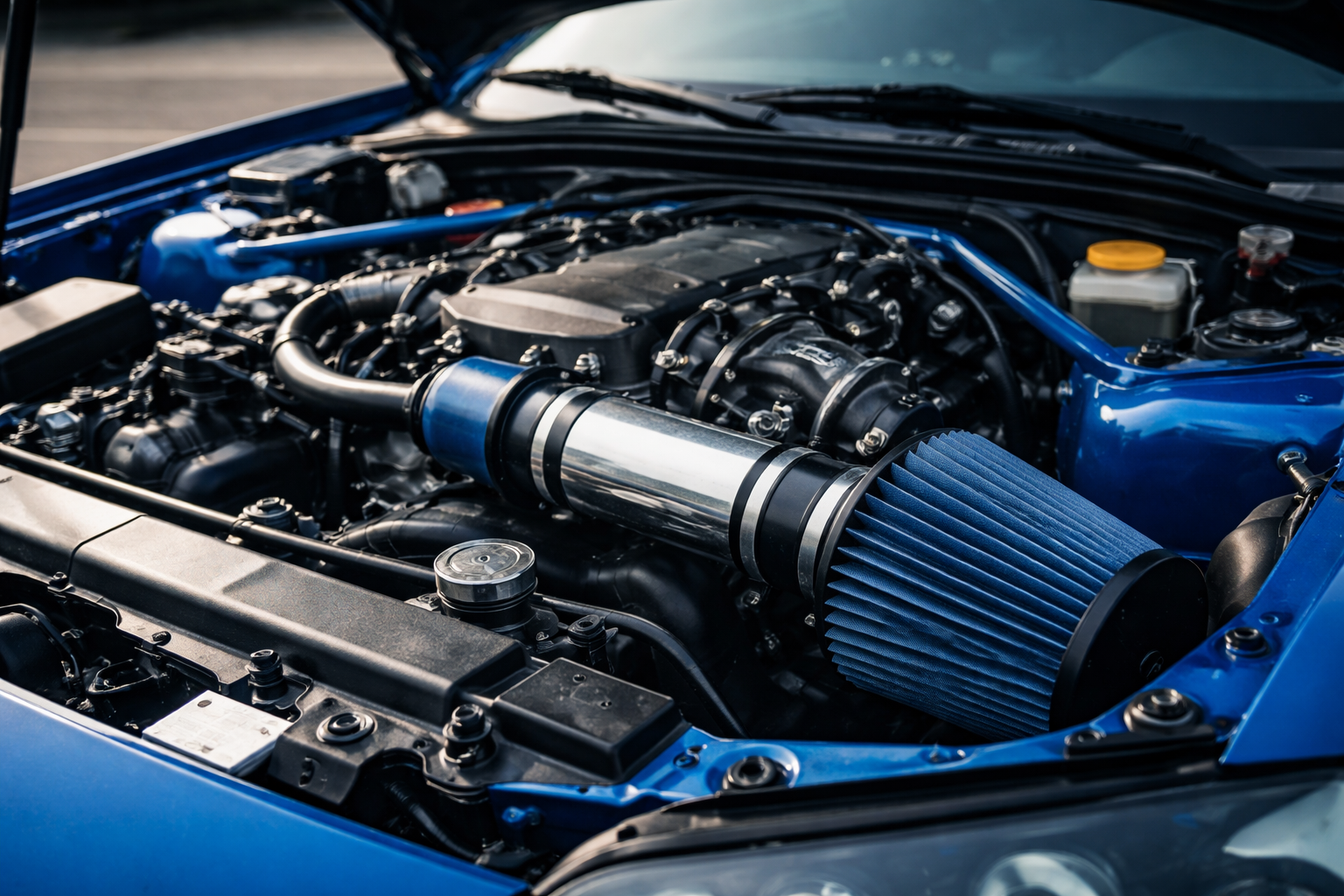
If you are asking does a cold air intake add horsepower, the honest answer is: yes, sometimes — but usually not as much as people expect.
That is the short version. A cold air intake can help your engine breathe better, improve throttle response, and in some setups add a small amount of power. But the real result depends on the engine, the factory intake design, the quality of the kit, the temperature of the incoming air, and whether the rest of the setup supports the upgrade.
Many people search does a cold air intake add horsepower because they want one simple bolt-on mod that transforms the car. In reality, this is usually a modest upgrade, not a miracle part. On some cars, the gain is small. On others, it mainly changes sound and response. And in some cases, a poor-quality intake can actually hurt performance.
In this guide, you will learn when a cold air intake can add power, how much horsepower you can realistically expect, what affects results, and whether this mod is worth it for a daily driver or project car.
Let’s answer the main question clearly: does a cold air intake add horsepower?
Yes, a cold air intake can add horsepower, but the gain is usually modest on a mostly stock car. In general, the improvement often comes from reducing intake restriction, improving airflow path, and pulling in cooler air than a hotter engine-bay setup.
That matters because cooler air is denser, and denser air contains more oxygen. More oxygen gives the engine better conditions to make power when the ECU and the rest of the setup can take advantage of it. This is why intake temperature matters for performance. The U.S. Department of Energy notes that colder air is denser than warm air, which is part of why cooler intake air can help combustion efficiency.
But here is the key point: does a cold air intake add horsepower by itself in a dramatic way? Usually no. On many stock vehicles, the real-world gain is small enough that some drivers feel more sound than actual speed.
To understand does a cold air intake add horsepower, you need to understand what the part is trying to improve.
A cold air intake typically changes three things:
The idea is simple. If the intake system moves air more efficiently and feeds the engine cooler, denser air, the engine may operate under better conditions for performance.
That does not mean every aftermarket intake is automatically better than the factory system. Some stock intakes are already very efficient. Some aftermarket kits are built more for noise than measurable gains. That is why the question does a cold air intake add horsepower cannot be answered with the same number for every car.
This is the part most readers really want to know.
If you search does a cold air intake add horsepower, the realistic answer on a mostly stock vehicle is often something like:
On many daily drivers, the gain may be modest enough that it shows better on paper than on the street. In other words, the intake may help, but it is rarely the kind of mod that completely changes the car by itself.
That fits well with the way TorqueBrief already explains airflow mods: the site’s current intake and filter-related content emphasizes that gains are real in some cases, but often small and highly dependent on setup, installation, and engine type.
One reason people get confused about does a cold air intake add horsepower is that not every car reacts the same way.
Some manufacturers already design efficient stock airboxes. In those cases, the aftermarket intake may offer only a limited improvement.
Turbo cars often respond differently than naturally aspirated cars because airflow, boost, and temperature management interact in a different way.
If the intake ends up pulling hot air from the engine bay, the result may be worse than expected. Hotter intake air reduces density, which works against power.
Some cars respond better after the ECU has adapted, and some benefit more when paired with a proper tune.
An intake may work better when the car also has improved exhaust flow, a better intercooler on turbo applications, or a tune that can make use of the airflow changes.
That is why does a cold air intake add horsepower is often the wrong question by itself. A better question is: does this intake help this specific setup?
This is where things get interesting.
A good factory airbox can sometimes be a smarter choice than a cheap aftermarket intake. Some stock systems already shield heat well, filter effectively, and support enough airflow for mild setups.
That is also why TorqueBrief already covers the debate between inbox filter vs intake, especially for daily use, where practicality and consistency matter as much as peak gain.
So, does a cold air intake add horsepower compared to a stock airbox?
Sometimes yes. But if the stock airbox is already efficient, the difference may be smaller than marketing suggests.
For many drivers, the real benefits are often:
Those are still valid reasons to install one. They just are not the same thing as a huge horsepower jump.
On turbo cars, the answer to does a cold air intake add horsepower is often a bit more favorable, but still depends on the platform.
Turbo engines care a lot about airflow and temperature. If the factory intake is restrictive, an improved intake can help the turbo breathe more easily and may support better response or better performance at higher load.
But even here, the intake usually makes more sense as part of a package:
That matches the upgrade logic TorqueBrief already uses in its articles on remap, Stage 1, Stage 2, and downpipe, where mods work better when planned together rather than installed randomly.
On naturally aspirated engines, the answer is often more conservative.
Yes, a cold air intake can help airflow, but naturally aspirated cars usually do not see dramatic gains from this mod alone. The engine has no turbo forcing extra air in, so the improvement depends even more on how restrictive the original setup was.
If the stock intake is already decent, the difference may be subtle.
That does not mean the mod is useless. It just means that when asking does a cold air intake add horsepower, NA owners should expect modest gains, better sound, and maybe better response, not a night-and-day transformation.
Not true. The gain can be small, and in some cases the change is more about sound than measurable power.
A louder intake often feels faster, but sound and horsepower are not the same thing.
A poor design that pulls hot air or fits badly can hurt consistency and drivability.
Not always. But some platforms benefit more from the intake when tuned.
Not necessarily. Depending on the car, tires, maintenance, and a smarter airflow plan may deliver better value first.
If you are still asking does a cold air intake add horsepower, it also helps to look at the total ownership benefits.
For many people, the upgrade is worth it not just because of peak numbers, but because it makes the car feel more alive.
This is where you need to be realistic.
TorqueBrief already discusses these concerns in its current filter-related content, especially around engine protection, filtration quality, and situations where a “performance filter” can become a bad idea if installed or maintained poorly.
So yes, does a cold air intake add horsepower is a valid question, but you also need to ask whether the specific kit protects the engine properly and fits your real-world use.
For a daily driver, the answer depends on your expectations.
If you expect a major power gain, you may be disappointed.
If you want:
then the mod can make sense.
For many daily-driven cars, a good intake is more about overall driving feel than raw dyno gains. That is why the question does a cold air intake add horsepower should always be paired with is it worth the cost for my goal?
Before buying an intake, ask these questions:
Some are, some are not.
This is critical.
Cheap filtration is not worth the risk.
Look for real-world feedback, not just marketing.
If yes, the intake may make more sense as part of the full plan.
If your goal is real performance, do not treat the intake like a magic shortcut.
A smarter path is:
This staged approach fits the TorqueBrief style very well, since the site consistently frames performance mods around cost-benefit, supporting parts, and avoiding random upgrades that do not work well together.
So, does a cold air intake add horsepower?
Yes, it can — but usually in modest amounts.
On the right car, with the right design, proper installation, and realistic expectations, a cold air intake can improve airflow, help throttle response, and add a small amount of power. On other setups, the biggest change may simply be sound.
The smartest takeaway is this:
That is how you turn a simple mod into a smart upgrade instead of a disappointing purchase.
Department of Energy (U.S.): Fuel Economy in Cold Weather
https://www.energy.gov/energysaver/fuel-economy-cold-weather
Yes, it can, but the gain is usually modest. On many stock cars, the difference is noticeable mainly in sound and response rather than dramatic speed.
Sometimes yes. But some platforms benefit more when the intake is combined with a tune and other supporting mods.
It can be, as long as expectations are realistic. It is usually a starter mod, not a huge horsepower mod.
Yes, if it pulls hot air, has poor filtration, or is badly installed.
For some daily drivers, a drop-in filter and good stock airbox may be the better value. It depends on the platform and goal.
Best Project Cars for Beginners: 9 Smart Picks That Actually Make Sense