
Inscreva-se na Newsletter
Digite seu endereço de e-mail abaixo e inscreva-se na nossa newsletter.
Documentando a paixão por carros
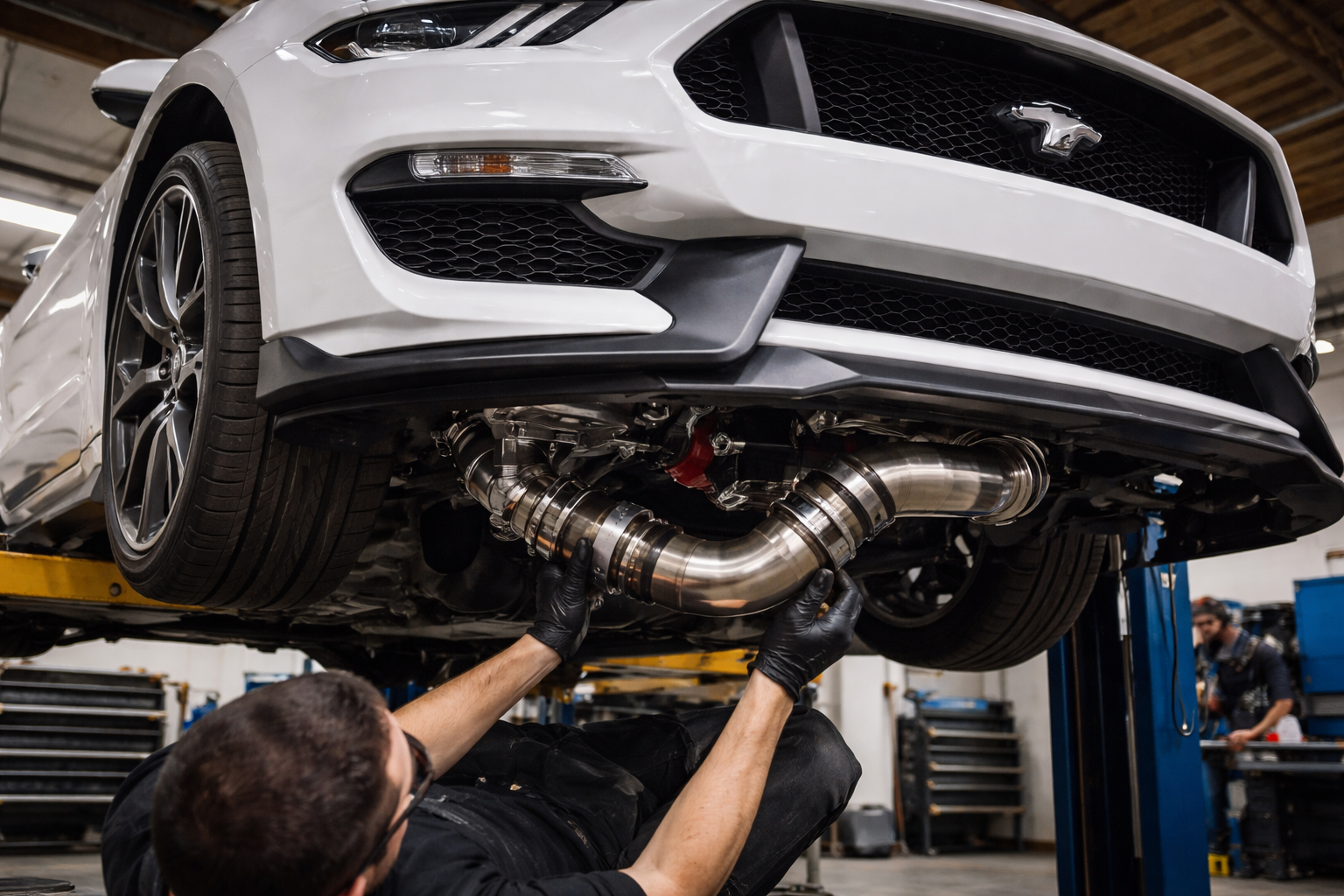
If you’re searching what is a downpipe, you probably want a straight answer before spending money on your car. In simple terms, what is a downpipe? It is the section of exhaust that connects the turbocharger to the rest of the exhaust system. On most turbo cars, this is one of the most heat-intensive and restriction-sensitive parts of the entire setup.
That is why the topic is so common among owners planning a Stage 1 or Stage 2 build. A downpipe does not just change sound. It can affect exhaust flow, turbo response, emissions equipment, check-engine-light behavior, and whether the car still makes sense for daily street use. Garrett’s technical material explains why reducing backpressure can benefit peak power in turbo applications, while the EPA makes clear that tampering with emissions-control systems can create legal problems on public-road vehicles in the United States.
Before going deeper, it helps to understand the ECU side of the equation. If your goal is to connect hardware changes with tuning, read our what is an ecu tune guide.
So, what is a downpipe at the technical level? It is the first exhaust pipe section after the turbine housing on a turbocharged vehicle. Exhaust gases leave the engine, spin the turbo’s turbine, and then enter the downpipe before moving into the rest of the system.
In many factory turbo cars, the downpipe area also houses the catalytic converter and oxygen sensor bungs. That is one reason this part matters more than many beginners expect. This is not just “another pipe.” It sits in a critical area where heat, emissions compliance, sensor readings, and post-turbo flow all meet. The EPA specifically lists catalysts among emissions-control elements, which is why this part carries more legal and technical weight than many basic bolt-ons.
If you want the shortest possible definition, here it is:
what is a downpipe = the first section of exhaust after the turbo.
Most people are not asking this because they want a textbook definition. They want to know whether changing it will actually make the car faster, louder, or more fun to drive.
That is a fair question. On a turbo platform, reducing post-turbine restriction can help the system breathe more freely. Garrett’s engineering material notes that minimizing backpressure at higher rpm benefits peak power, which helps explain why freer-flowing post-turbine hardware gets so much attention in performance builds. But that does not mean every downpipe upgrade is automatically a smart street mod. The result depends on the full setup, the tune, the catalytic converter strategy, and how the car is used.
To understand it in real-world terms, picture the gas path like this:
engine → exhaust manifold → turbocharger → downpipe → mid-pipe/front pipe → cat-back → mufflers/tips
The downpipe lives right after the turbocharger, which is why it sees intense heat and rapid gas flow. On many OEM turbo setups, it is also where packaging gets tight and where the factory system may prioritize emissions compliance, noise control, cost, and broad durability over maximum performance.
That balance is normal in production cars. Factory calibrations and factory hardware are designed around emissions standards, reliability targets, fuel quality variation, and customer usage in all kinds of climates. That is one reason enthusiasts start asking what is a downpipe as soon as they begin looking for extra response and easier top-end flow.
A good answer to what is a downpipe has to include what actually changes after installation.
First, the car may build boost more cleanly or feel less choked at higher rpm, especially when the factory downpipe is restrictive. Second, the exhaust note usually changes, often becoming deeper, sharper, or louder depending on the rest of the system. Third, heat management, catalyst efficiency, and sensor behavior can all change, which is why the ECU and emissions side cannot be ignored.
This is also why a downpipe is often discussed together with tuning. If you are pairing hardware with software, see our what is an ecu tune guide.
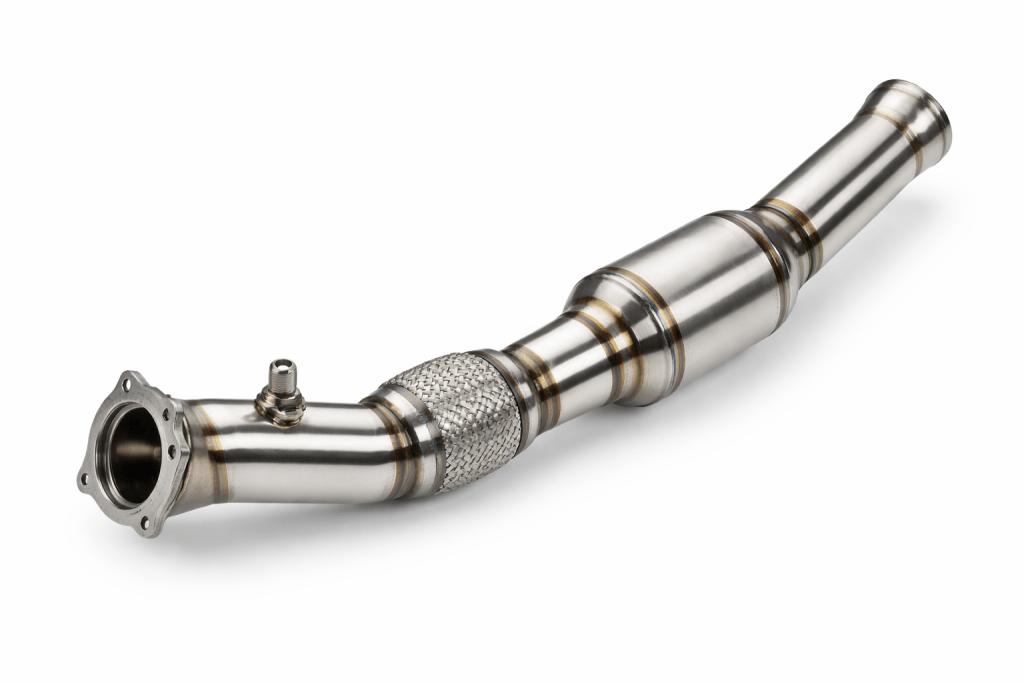
When US drivers ask what is a downpipe, they are often really asking which type makes sense: catted or catless.
A catted downpipe uses a catalytic converter, usually a higher-flow aftermarket unit. A catless downpipe removes the converter entirely. From a pure performance perspective, the less restrictive option may sound tempting. But from a street-use and compliance perspective, the decision is much bigger than horsepower.
The EPA says tampering with required emissions controls and using aftermarket defeat devices on road vehicles can trigger enforcement and penalties. The agency specifically identifies catalysts as emissions-control elements and states that aftermarket parts whose principal effect is bypassing, defeating, or rendering inoperative these systems may be illegal. In California, CARB’s aftermarket catalytic converter rules are stricter still: aftermarket converters sold there must meet CARB approval requirements.
In plain English, that means a catless downpipe may be a race-only style choice on paper, but it can become a legal and inspection problem very quickly for a street-driven US car. For most daily drivers, a quality catted setup is usually the more realistic answer.
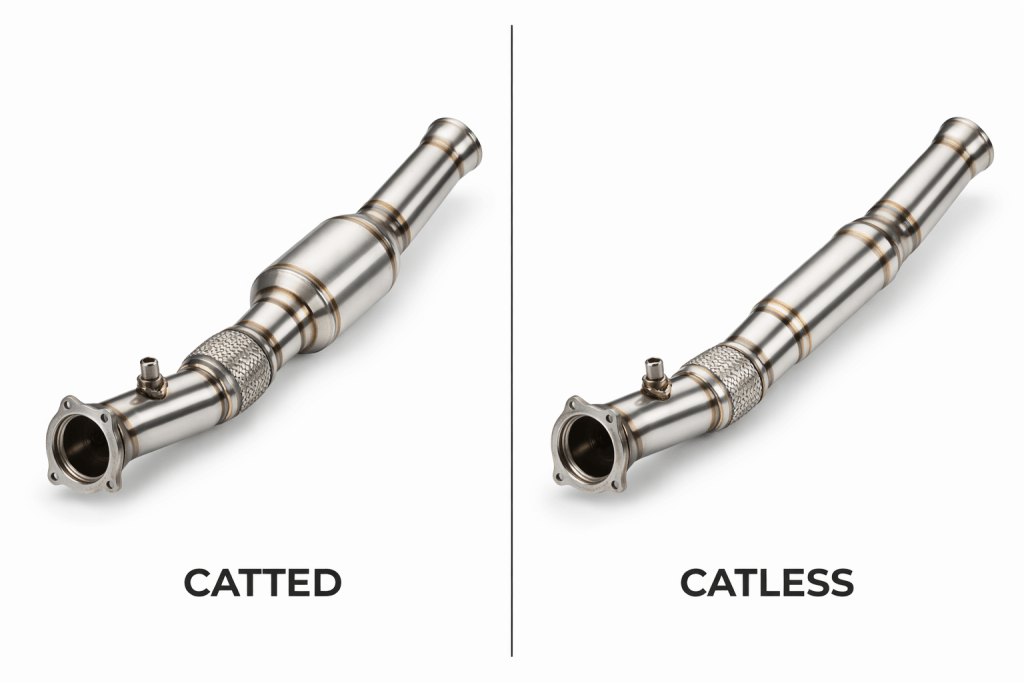
One reason this gets searched so often is simple: people want to know if it adds power.
The honest answer is yes, it can, but the gain depends heavily on the platform. Turbo cars respond better than naturally aspirated cars because the downpipe directly affects post-turbine flow. On some setups, the bigger difference is not the peak dyno number but how quickly the engine pulls through the mid-range and how easily it continues breathing near the top of the rev range.
Still, the part should not be sold as magic. A downpipe works as part of a system. Turbo sizing, factory calibration, fuel, intercooler efficiency, intake flow, and the quality of the tune all shape the final result.
A lot of people searching this are really one step away from another question: do I need a tune after the install?
In many modern turbo cars, the smart answer is yes, or at least “very often.” That is because changing post-turbo flow can alter how the ECU sees catalyst efficiency, oxygen sensor behavior, boost control, and overall system balance. Some cars may physically run with the hardware installed, but that does not automatically mean the setup is optimized, trouble-free, or emissions-ready.
This is exactly why the downpipe conversation naturally overlaps with tuning. If you have not read it yet, our what is an ecu tune article is the best internal anchor here, because it explains how software changes interact with airflow, boost, torque delivery, and hardware.
A useful explanation of what is a downpipe cannot stop at performance. It also has to address headaches.
Check engine lights are common concerns because the downpipe area often contains emissions-related sensors and catalytic monitoring. Reliability also depends on build quality, weld quality, fitment, heat shielding, and whether the rest of the setup was planned properly. Poor fitment can create leaks, rattles, heat issues, and long-term frustration.
Warranty concerns are more nuanced. The FTC says your warranty generally remains in effect if you use aftermarket or recycled parts, but a manufacturer or dealer can deny coverage for damage caused by a defective or improperly installed aftermarket part. That means a downpipe does not automatically void the entire vehicle warranty, but it can still complicate a claim if the modification is tied to the failure being discussed. See the FTC’s auto warranties and service contracts guidance.
By the time someone finishes researching what is a downpipe, the next question is usually whether it is worth installing on a daily-driven car.
For many street-driven turbo cars, the answer depends on priorities. If the goal is a cleaner, safer, more daily-friendly build, a high-quality catted downpipe with proper tuning is usually the more balanced path. If the goal is maximum aggression with less concern for emissions legality, inspection headaches, smell, or cabin noise, the answer may look different, but that is a much narrower use case.
That is also why the best downpipe decisions are not made in isolation. They are made alongside honest goals, a realistic budget, state emissions rules, and the rest of the hardware plan.
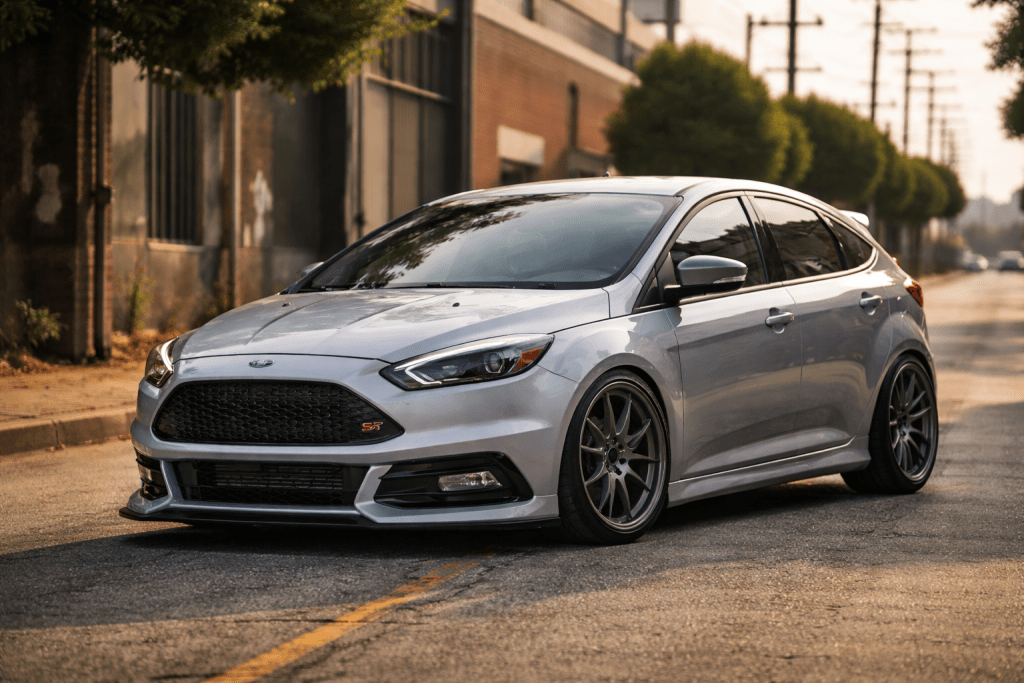
If you came here researching this topic, avoid these common mistakes:
Most regrets in this category do not come from the idea of a downpipe itself. They come from bad planning.
So, what is a downpipe?
It is the first section of exhaust after the turbocharger, and on many modern turbo cars it is one of the most important performance-and-compliance parts in the system. A downpipe can improve flow, change sound, and support stronger performance on the right setup. But it can also affect emissions compliance, trigger check-engine lights, and create warranty or inspection issues if the build is careless.
For the US market, the best angle is not “more noise at any cost.” It is understanding the part in the context of turbo response, tuning, emissions rules, and realistic daily use.
What is a downpipe on a turbo car? It is the exhaust section directly after the turbocharger that routes gases into the rest of the exhaust system.
What is a downpipe supposed to improve? On the right turbo platform, it may help reduce restriction, improve response, and support stronger airflow at higher rpm.
What is a downpipe best paired with? Usually with the right ECU calibration, a healthy maintenance baseline, and realistic emissions-aware planning.