
Inscreva-se na Newsletter
Digite seu endereço de e-mail abaixo e inscreva-se na nossa newsletter.
Documentando a paixão por carros

If you are searching what does an intercooler do, you probably want one clear answer before spending money on a mod. In simple terms, what does an intercooler do? It cools the hot, compressed air coming from a turbocharger or supercharger before that air enters the engine.
That cooling matters more than many drivers realize. Compressed air gets hot, and hot air is less dense than cool air. When the intake charge is cooler, the engine can work with denser air, more stable combustion, and more consistent performance. That is the real reason this topic comes up so often when drivers start researching turbo mods, heat soak, or supporting hardware for a tuned car.
If you are new to forced induction, start with our How Does a Turbo Work? A Clear Guide for US Drivers article. If you are already planning software and bolt-ons, also read What Is an ECU Tune? A Clear Guide for US Drivers, What Is a Downpipe? A Clear Guide for US Drivers, and Stage 1 vs Stage 2 Tune: What Really Changes?.
The short answer to what does an intercooler do is this: it removes heat from the compressed intake air before that air reaches the engine. According to Garrett, cooler charge air is denser than hot air, which allows more oxygen to enter the combustion chamber at a given boost pressure. That is why the subject is really about heat control, airflow quality, and repeatable performance.
In real-world driving, this part helps the engine hold power more consistently, especially when outside temperatures are high or the car is being driven hard more than once. Instead of feeling strong on the first pull and soft on the second or third, a good intercooler helps the setup stay more stable.
To understand what does an intercooler do, you first need to understand why turbocharged and supercharged engines create hotter intake air. A turbo or supercharger compresses air so the engine can get more oxygen into the cylinders. That added airflow is what helps a smaller engine make more torque and horsepower. The tradeoff is heat.
As boost rises, intake air temperature also rises. If the charge air stays too hot, density drops, knock tendency can increase, and performance becomes less consistent. Bosch notes that the ECU uses intake air pressure and temperature data to help control fuel quantity and engine behavior through boost and intake sensing systems.
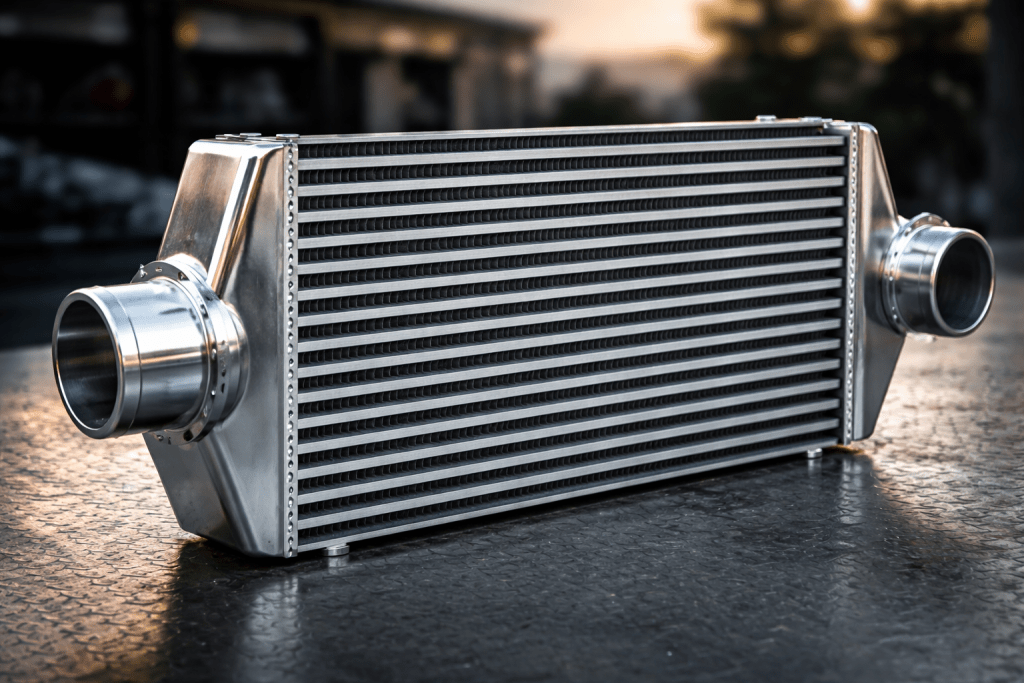
A lot of people ask what does an intercooler do because they want to know whether it adds horsepower. The honest answer is that the intercooler is not a magic horsepower part by itself. Its job is to support performance by lowering charge-air temperature.
So, what does an intercooler do for performance in practical terms?
That is why the value of an intercooler is not just a dyno question. It is also a consistency question. On many street cars, the biggest benefit is not one huge peak number. The bigger benefit is that the car feels more repeatable in summer heat, highway pulls, track use, or aggressive back-to-back acceleration.

If you are searching what does an intercooler do, you are probably also asking whether it increases horsepower. The best answer is: sometimes, but indirectly.
A better intercooler can help a turbo car keep more of its power when the stock system is struggling with heat. Garrett explains that intercooler core design matters because sustained thermal stability defines real-world consistency, not just one short pull. In other words, what does an intercooler do for horsepower? It helps preserve usable power by reducing intake temperature and improving the density of the charge air.
On a completely stock daily driver in cool weather, the gain may be modest. On a tuned car or in hot weather, the difference can be more noticeable. That is why an intercooler becomes more important once you move beyond a basic stock setup.
Another part of understanding what does an intercooler do is knowing that there is more than one way to cool the charge air.
An air-to-air intercooler uses outside airflow to remove heat from the compressed air. This is the most common setup on many turbo street cars. It is popular because it is simple, durable, and often cost-effective.
An air-to-water intercooler uses coolant to remove heat from the compressed air and then transfers that heat through a separate cooling circuit. MAHLE explains that modern indirect charge-air cooling systems can offer packaging advantages and low pressure loss. This design can work very well in tighter engine bays or higher-performance applications.
The basic job stays the same in both layouts: remove heat from compressed air. The difference is how the system moves that heat away.
This is where the topic gets more important. On a tuned setup, what does an intercooler do becomes a bigger deal because the engine is usually operating with more boost, more airflow demand, or both.
A stock intercooler may be good enough for factory power levels and average driving. But once the car is tuned, repeated pulls can raise intake temperatures more quickly. That is why intercooler performance on a tuned car is often tied directly to consistency, safety margin, and how well the setup handles heat.
This is also why an intercooler is often discussed alongside an ECU tune. Software can request more from the engine, but supporting hardware helps the engine manage those demands more effectively. If you have not read it yet, our What Is an ECU Tune? A Clear Guide for US Drivers article explains that side of the equation.
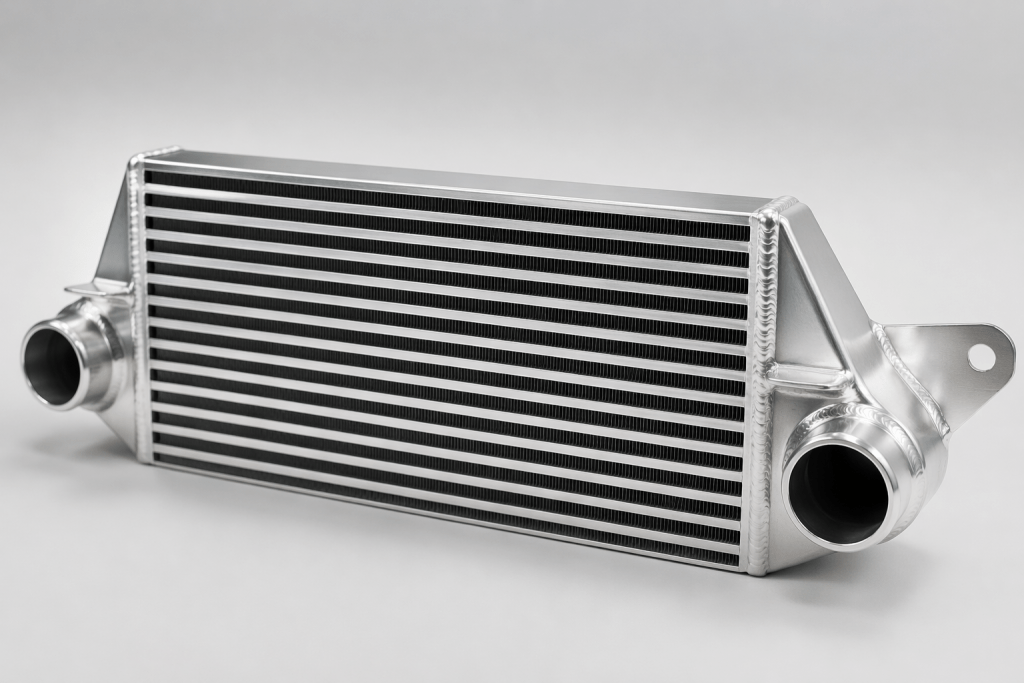
Once drivers understand what does an intercooler do, the next question is whether the factory unit is enough. Sometimes it is. Sometimes it is not.
Common signs the stock intercooler may be the weak link include:
In these cases, an upgraded intercooler may help the setup stay more stable and predictable instead of feeling inconsistent every time temperatures rise.
No. A common mistake is assuming that the largest core is automatically the best answer. That is not how smart builds work.
When people ask what does an intercooler do, they should also ask whether the intercooler matches the platform. A well-designed intercooler needs to balance cooling efficiency, pressure drop, flow quality, fitment, and the way the car is actually used. Garrett notes that effective intercooler cores are designed to maximize heat transfer while maintaining controlled pressure drop.
Chosen correctly, an intercooler improves heat control without creating unnecessary tradeoffs. A poorly chosen intercooler, on the other hand, can create packaging problems, airflow issues, or slower response than expected.
No, and this is another reason people search what does an intercooler do. A cold air intake and an intercooler both relate to intake air, but they do different jobs.
A cold air intake changes how the engine draws in air from outside the car. An intercooler cools compressed air after the turbo or supercharger has already heated it. If you want the full intake-side picture, read Is a Cold Air Intake Worth It? Honest Pros, Cons, and Real Results.
On many turbo cars, owners researching what does an intercooler do are also researching downpipes, tunes, and stage upgrades. That makes sense, because these parts often affect the same broader goal: helping the engine move air more efficiently.
The downpipe helps the exhaust side of the turbo system breathe more freely. The intercooler helps the intake side manage heat more effectively. That is why these topics often show up together in Stage 2 conversations. For the exhaust-side explanation, read What Is a Downpipe? A Clear Guide for US Drivers.
Another smart way to frame what does an intercooler do is to ask what it does for reliability and thermal control. An intercooler is not a guarantee that the engine will be safe under every condition, and it does not fix a bad tune, poor fuel, or weak maintenance. But it does help the system operate with better temperature control.
That matters because engines respond better when intake conditions are more stable. Bosch explains that the ECU calculates intake air pressure and temperature and uses that information to control fuel quantity. When the system sees healthier charge-air temperatures, that helps the calibration work from a better starting point.
So what does an intercooler do for reliability? It supports a more controlled environment for a boosted engine, especially when the car is driven hard or modified beyond stock.
So, what does an intercooler do?
It cools the hot, compressed air coming from a turbocharger or supercharger before that air enters the engine. That cooler air is denser, which helps the engine maintain more consistent performance and manage heat more effectively. If you want the cleanest summary of what does an intercooler do, that is it.
For many stock daily drivers, the factory intercooler may be enough. For tuned cars, hot climates, repeated hard driving, or builds that need stronger thermal control, an upgraded intercooler can make a real difference. That is the real-world answer: it helps a boosted engine stay closer to its best version when temperatures and demand go up.
If you are planning your next mod path, keep reading TorqueBrief’s English guides on How Does a Turbo Work? A Clear Guide for US Drivers, What Is an ECU Tune? A Clear Guide for US Drivers, What Is a Downpipe? A Clear Guide for US Drivers, and Stage 1 vs Stage 2 Tune: What Really Changes?.
It cools the compressed air from the turbo before that air reaches the engine, which helps reduce heat and improve consistency.
It usually helps preserve horsepower by lowering charge-air temperature and reducing heat soak rather than acting like a direct power adder by itself.
A radiator cools engine coolant. An intercooler cools compressed intake air.
On a stock turbo car, it still cools the charge air, but the performance improvement from an upgrade may be smaller unless the factory system heat-soaks easily.